**Clearing the air — literally**
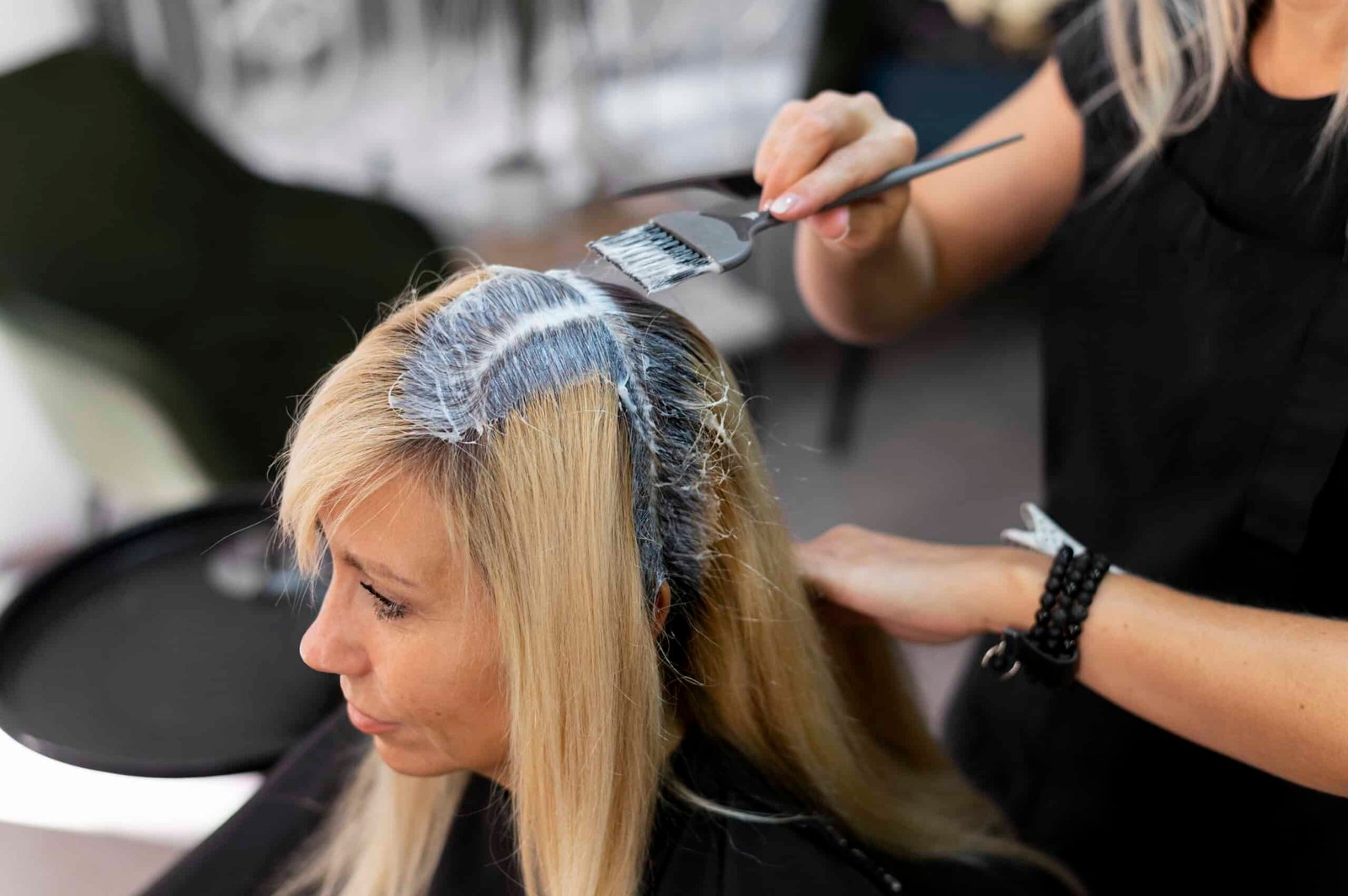
Product choice is only half the equation. Ventilation is the other half. A salon with strong airflow and a well-maintained HVAC system disperses chemical vapors before they concentrate. HEPA air purifiers add a second layer, capturing fine particles and residual vapors that ventilation alone may miss. And don't overlook the quiet contribution of plants — peace lilies, spider plants, and snake plants absorb certain pollutants while softening the space visually. Schedule filter replacements and duct cleaning the way you schedule color appointments: on a fixed calendar, not when problems appear.
**Low-VOC choices, water-based where possible**
Every product swapped for a lower-VOC or water-based alternative reduces the cumulative fumes a stylist breathes over a career. This isn't about perfection — it's about stacking small reductions until the baseline exposure drops meaningfully.
**The home shouldn't undo the work**
A clean salon means little if the stylist goes home to harsh cleaners and synthetic fragrances. The same logic applies at home: replace ammonia- and bleach-based cleaners with plant-based alternatives, cut single-use plastics in favor of glass and stainless steel, and choose organic where it matters most — food, textiles, personal care. Swap paraffin candles and plug-in diffusers for soy or beeswax candles scented with essential oils, or simpler still, a pot of simmering herbs and citrus peel.
**The takeaway**
Women's Health Week is a reminder that protecting health is cumulative. It lives in the developer you choose, the fan you maintain, the cleaner you spray at home. None of these changes is dramatic on its own. Together, they shift what "normal" exposure looks like — for the stylist behind the chair and the client in it. Cleaner choices, made consistently, are the most professional standard of all.